

Trailer Life Tow Guide: A Comprehensive Overview
This guide delves into the essentials of safe and legal towing‚ covering capacity‚ equipment‚ preparation‚ and practices.
It addresses common mistakes and regulatory aspects for a worry-free journey.
Understanding Towing Capacity
Towing capacity isn’t a single number; it’s a complex calculation determined by your vehicle’s manufacturer. It’s crucial to understand that not all vehicles are suitable for towing‚ and those that are have specific weight limits for both legal and safety reasons. Exceeding these limits dramatically increases the risk of accidents and can lead to severe mechanical failures.
Manufacturers establish these limits considering factors like engine power‚ transmission strength‚ axle ratings‚ and braking capabilities. Ignoring these specifications can have dire consequences‚ potentially leaving you stranded or‚ worse‚ causing a collision. Always consult your vehicle’s owner’s manual and the trailer’s data plate to determine the appropriate towing capacity. Remember‚ it’s not just about if your vehicle can tow‚ but how much it can safely tow.
Furthermore‚ understanding the difference between Gross Vehicle Weight Rating (GVWR) and other weight ratings is paramount for responsible towing. Prioritize safety and adhere to the manufacturer’s guidelines for a secure and enjoyable towing experience.
Vehicle Towing Limits: A Detailed Examination
Vehicle towing limits are rarely a straightforward figure. They encompass several critical ratings‚ including Gross Vehicle Weight Rating (GVWR)‚ Gross Combined Weight Rating (GCWR)‚ and maximum tongue weight. The GVWR is the maximum permissible weight of the fully loaded vehicle‚ while the GCWR represents the maximum allowable weight of the vehicle and the fully loaded trailer combined.
Modern pickups boast impressive towing capabilities‚ enabling contractors and fleet operators to haul substantial loads. However‚ simply having the capacity doesn’t negate the need for careful calculation. Exceeding the GCWR overloads the entire system‚ stressing the engine‚ transmission‚ brakes‚ and suspension.
Maximum tongue weight‚ typically 10-15% of the trailer’s weight‚ is equally important. Too little tongue weight can cause trailer sway‚ while too much can overload the vehicle’s rear suspension. Always verify these limits in your vehicle’s owner’s manual and adhere to them strictly for safe towing.
Calculating Your Vehicle’s Maximum Towing Capacity
Determining your vehicle’s maximum towing capacity isn’t simply reading a number; it requires a detailed assessment. Start with the Gross Combined Weight Rating (GCWR) found in your owner’s manual. From this‚ subtract your vehicle’s Gross Vehicle Weight Rating (GVWR) – also in the manual – to arrive at the base towing capacity;

However‚ this isn’t the final figure. Account for all passengers‚ cargo‚ and accessories already in your vehicle. Subtract this combined weight from the initial calculation. The remaining number represents your realistic maximum towing capacity.
Remember‚ these are maximums. It’s prudent to stay well under the limit for a safety margin. Consider factors like terrain‚ weather‚ and driving conditions. Ignoring these limits can lead to dangerous situations‚ potentially leaving you stranded or causing an accident.
Trailer Weight: Gross Vehicle Weight Rating (GVWR) Explained
The Gross Vehicle Weight Rating (GVWR) is the maximum permissible weight of a fully loaded trailer‚ as specified by the manufacturer. This includes the trailer’s weight itself‚ plus the weight of all cargo‚ fluids‚ and accessories it carries. It’s a crucial figure for safe towing‚ and exceeding it is both dangerous and often illegal.
Understanding GVWR is distinct from simply knowing the ‘dry weight’ of a trailer. Dry weight doesn’t account for anything added after manufacturing. Always check the GVWR sticker‚ typically located on the trailer’s frame‚ near the hitch.
Properly calculating and adhering to the GVWR prevents overloading‚ which can compromise braking performance‚ tire integrity‚ and overall vehicle control. Overloading can also lead to significant legal consequences and void warranty coverage. Prioritize safety and compliance by staying within the GVWR limits.
Understanding Tongue Weight and Its Importance
Tongue weight refers to the amount of weight exerted downward on the hitch ball by the trailer’s tongue. Ideally‚ it should be 10-15% of the trailer’s GVWR. Proper tongue weight is vital for stable towing and prevents dangerous situations like trailer sway.
Insufficient tongue weight can cause the trailer to wander and become unstable‚ particularly at highway speeds. Conversely‚ excessive tongue weight can overload the hitch and potentially damage the tow vehicle’s suspension or frame.
Distributing the load within the trailer correctly is key to achieving the optimal tongue weight. Heavier items should be positioned over or slightly ahead of the trailer’s axles. Regularly check and adjust the load distribution to maintain safe and controlled towing. A weight distribution hitch can help manage tongue weight effectively.

Essential Towing Equipment
Selecting the right gear—hitches‚ brakes‚ mirrors‚ and safety chains—is crucial for secure towing. Proper equipment enhances control‚ visibility‚ and overall safety on the road.
Choosing the Right Hitch: Types and Considerations
Selecting the appropriate hitch is paramount for safe towing‚ and several types cater to different needs. Ball hitches‚ the most common‚ are rated by their maximum towing capacity and come in various receiver sizes – 1-1/4 inch‚ 2 inch‚ and 2-1/2 inch being standard.
Pintle hitches offer robust connections‚ often favored for heavy-duty applications and off-road use. Gooseneck hitches‚ secured within the truck bed‚ provide exceptional stability for large trailers.
Consider your trailer’s Gross Vehicle Weight Rating (GVWR) and your vehicle’s towing capacity when choosing. Ensure the hitch’s rating exceeds both figures. Receiver size compatibility is also vital. Beyond the hitch itself‚ factors like shank rise or drop are crucial for level towing.
Weight distribution hitches (WDH) are often necessary for heavier trailers to redistribute weight and improve handling. Finally‚ always verify that the hitch is properly installed and secured before each trip.
Weight Distribution Hitches (WDH): When and Why You Need One
Weight Distribution Hitches (WDH) are crucial when a trailer’s tongue weight exceeds the vehicle’s capacity‚ or when experiencing trailer sway. They redistribute weight from the rear axle to the front and trailer axles‚ creating a more level and stable towing experience.
Without a WDH‚ excessive tongue weight can overload the rear suspension‚ causing squat‚ poor handling‚ and reduced braking efficiency. This can lead to dangerous situations‚ especially during emergency maneuvers.
WDH systems utilize spring bars that transfer weight forward. Proper adjustment is vital; too much weight transfer can negatively impact steering. They are particularly beneficial for longer trailers and those carrying heavy loads.
If you’ve invested in a travel trailer‚ a WDH is often a necessary addition. Consult your vehicle and trailer manuals to determine if a WDH is recommended or required for safe towing.
Trailer Brakes: Electric vs. Surge
When towing heavier trailers‚ supplemental braking systems are essential for safety. Two primary types dominate the market: electric and surge brakes. Understanding their differences is crucial for selecting the right system.
Electric brakes utilize electromagnets activated by a controller in the tow vehicle. The driver adjusts braking force‚ providing precise control. They are ideal for heavier trailers and offer superior stopping power‚ especially in challenging conditions.
Surge brakes‚ conversely‚ operate hydraulically. When the tow vehicle brakes‚ the trailer’s momentum activates a master cylinder‚ applying the trailer brakes. They are simpler and require less driver input‚ but offer less precise control.
Consider the trailer’s weight and intended use when choosing. Electric brakes are often preferred for larger‚ heavier loads‚ while surge brakes can suffice for lighter trailers. Always ensure compatibility with your tow vehicle.
Towing Mirrors: Enhancing Visibility
Maintaining adequate visibility while towing is paramount for safety. Standard vehicle mirrors often prove insufficient when a trailer obstructs the view‚ creating dangerous blind spots. Towing mirrors extend outward‚ providing a clear view of both sides of the trailer and surrounding traffic.
Several types are available‚ including universal-fit options that clamp onto existing mirrors and dedicated towing mirrors that replace them entirely. Consider features like telescoping arms‚ adjustable heads‚ and vibration dampening for optimal performance.
If equipped with rear view cameras‚ these will be your saviour. If not‚ proper mirrors are essential. Ensure the mirrors are securely mounted and properly adjusted before each trip. Regularly check for stability during travel.
Investing in quality towing mirrors isn’t just about convenience; it’s a critical safety measure that can prevent accidents and ensure a smoother‚ more confident towing experience.
Safety Chains and Breakaway Systems: Critical Safety Features
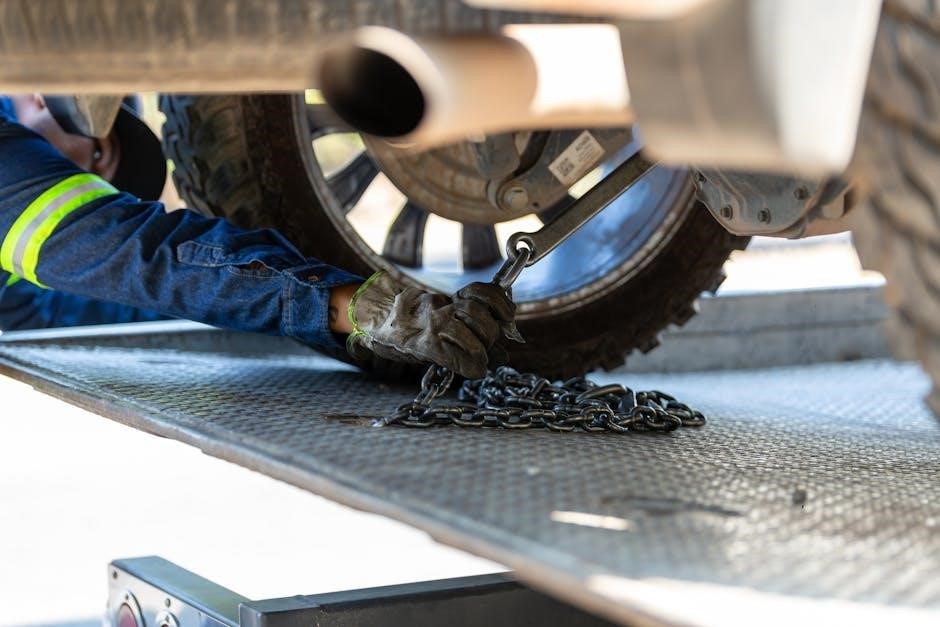
Even with a properly secured hitch‚ safety chains are a vital secondary connection between your tow vehicle and trailer. They act as a safeguard if the hitch fails‚ preventing complete separation and potential disaster. Always cross the chains beneath the hitch‚ allowing for limited movement and preventing them from dragging on the road.
A breakaway system is equally crucial. This independent braking system activates the trailer’s brakes if it becomes detached from the tow vehicle. It typically consists of a battery‚ a cable connected to the tow vehicle‚ and an activation mechanism.
Regularly inspect both safety chains and the breakaway system to ensure they are in good working order. Verify the battery is charged and the cable is securely attached. These features are not optional; they are essential for responsible towing.

Pre-Trip Inspection and Preparation
Before hitting the road‚ a thorough inspection is key. Check tires‚ lights‚ load security‚ and hitch connections. Proper preparation minimizes risks and ensures a smooth‚ safe towing experience.
Tire Pressure: Maintaining Optimal Pressure for Towing
Maintaining correct tire pressure is paramount for safe towing. Unlike everyday driving‚ towing demands increased pressure in both your tow vehicle and the trailer tires. Consult your vehicle’s owner’s manual and the trailer’s tire placard for the recommended pressures when towing – these are often higher than standard driving pressures.
Underinflation leads to excessive heat buildup‚ increasing the risk of tire failure‚ while overinflation can reduce traction and ride comfort. Always check tire pressure when the tires are cold‚ before embarking on your journey. Use a reliable tire pressure gauge and don’t rely solely on visual inspection.
Remember that tire pressure increases as tires warm up during driving. Never bleed air from warm tires to reduce pressure. Regularly inspect tires for wear‚ damage‚ and proper inflation throughout your trip‚ especially during extended hauls. Proper tire maintenance significantly enhances safety and extends tire lifespan.
Lighting Check: Ensuring All Lights Function Correctly
Before each towing trip‚ a thorough lighting check is non-negotiable for safety. Verify that all lights on both the tow vehicle and the trailer are functioning correctly. This includes headlights‚ taillights‚ brake lights‚ turn signals‚ and running lights. A helper is invaluable for this process‚ confirming visibility from different angles.
Pay close attention to the trailer’s connection to the tow vehicle‚ ensuring a secure electrical connection. Faulty wiring or a loose connection can cause lights to malfunction. Regularly inspect the wiring harness for damage‚ corrosion‚ or wear. Consider using dielectric grease to protect connections from the elements.
If any lights are not working‚ troubleshoot the issue before proceeding. Replacing a blown fuse or repairing a damaged wire is a small price to pay for enhanced safety on the road. Properly functioning lights are crucial for communicating your intentions to other drivers.
Securing the Load: Preventing Shifting Cargo
Properly securing the load within your trailer is paramount to safe towing. Shifting cargo can dramatically alter the trailer’s balance‚ leading to sway‚ loss of control‚ and potentially a serious accident. Distribute the weight evenly throughout the trailer‚ with heavier items placed low and centered over the axles.

Utilize tie-down straps‚ chains‚ or cargo nets to firmly secure all items. Avoid relying solely on friction or gravity. Regularly check the tightness of these restraints‚ especially after the first few miles of travel and during any stops. Consider using wheel chocks to prevent movement during loading and unloading.
Remember that even seemingly stable items can shift during braking or turning. Overloading the trailer exacerbates this risk. Always adhere to the trailer’s weight capacity and GVWR. A well-secured load contributes significantly to a stable and predictable towing experience.
Hitch Connection: Proper Attachment Procedures
Correct hitch connection is fundamental for safe towing. Begin by ensuring the hitch receiver on your vehicle is clean and free of debris. Carefully align the trailer coupler with the hitch ball‚ lowering the trailer until it fully seats. A crucial step is verifying the coupler is locked securely – listen for the audible click and visually inspect the locking mechanism.
If utilizing a weight distribution hitch (WDH)‚ follow the manufacturer’s instructions precisely for proper setup and adjustment. Connect the safety chains‚ crossing them under the trailer tongue to create a cradle. Ensure sufficient slack exists for turning‚ but avoid excessive looseness.
Finally‚ connect the breakaway cable to the tow vehicle‚ independent of the safety chains. Double-check all connections before each trip‚ and remember that the hitch ball should sit directly above the ball mount.

Safe Towing Practices
Prioritize reduced speeds‚ increased following distances‚ and awareness of trailer sway. Proper backing techniques and wind condition management are crucial for a secure trip.
Speed Limits and Safe Following Distances
Maintaining appropriate speed and following distance are paramount when towing. Posted speed limits are a starting point‚ but often‚ reducing speed further is advisable‚ especially considering the added weight and altered dynamics of a trailer. A general rule is to decrease your speed by at least 5-10 mph below the posted limit.
Crucially‚ increase your following distance significantly – ideally‚ double or even triple the usual distance. This extended space provides ample reaction time for braking and maneuvering‚ accounting for the trailer’s increased stopping distance. Remember‚ a fully loaded trailer dramatically affects your vehicle’s ability to stop quickly.
Anticipate potential hazards further ahead and avoid sudden braking or steering maneuvers. Smooth‚ gradual adjustments are key to maintaining control. Be particularly cautious on downhill grades‚ as gravity will accelerate both the tow vehicle and the trailer. Utilizing lower gears can help maintain a safe and controlled descent. Always be mindful of other drivers and their potential actions.
Avoiding Common Towing Mistakes
One frequent error is exceeding the vehicle’s towing capacity – a dangerous and potentially illegal practice. Always verify your vehicle’s limits before hooking up a trailer. Improper loading is another significant issue; ensure weight is distributed evenly‚ with heavier items closer to the axle. Overloading or poorly loading can lead to instability and control loss.
Neglecting pre-trip inspections is a common oversight. Regularly check tire pressure‚ lights‚ and hitch connections. Failing to account for trailer sway is also problematic; understanding its causes and correction techniques is vital. Ignoring wind conditions can exacerbate sway‚ demanding reduced speed and increased caution.
Finally‚ inadequate braking preparation is a critical mistake. Ensure trailer brakes are functioning correctly and synchronized with the tow vehicle’s braking system. Remember‚ safe towing requires diligence‚ preparation‚ and a constant awareness of your vehicle and trailer’s behavior.
Backing Up with a Trailer: Techniques and Tips
Backing up with a trailer demands a slow‚ deliberate approach. Steer in the opposite direction you want the trailer to go – a common point of confusion for beginners. Utilize your mirrors extensively; if equipped‚ rear-view cameras are invaluable aids. Having a spotter you trust is highly recommended‚ especially in tight spaces.
Small‚ incremental adjustments are key. Avoid sharp‚ sudden steering movements‚ as these can quickly lead to jackknifing. Practice in an open area to build confidence and develop muscle memory. Remember to pull forward if you find yourself in a difficult situation‚ resetting your angle before attempting to back up again.
Visualize the trailer’s path and anticipate its movement. Ensure the hitch ball sits directly above the ball mount. Patience is paramount; rushing increases the risk of errors and potential damage. Mastering this skill takes practice‚ but it’s crucial for safe maneuvering.
Managing Trailer Sway: Causes and Corrections
Trailer sway‚ a potentially dangerous situation‚ often stems from uneven weight distribution‚ high speeds‚ or external factors like wind. Improper loading – with too much weight at the rear of the trailer – is a primary culprit. Strong gusts of wind‚ especially from passing trucks‚ can also initiate sway.
If you experience sway‚ avoid sudden braking or steering corrections. Gently reduce your speed and maintain a firm grip on the steering wheel. Allow the sway to subside naturally. Weight distribution hitches (WDH) significantly improve stability and are highly recommended for heavier trailers.
Ensure your tires are properly inflated and that the trailer is securely hitched. Consider a friction sway control device for added security. Recognizing the early signs of sway – a feeling of instability or a slight wobble – allows for proactive correction before it escalates into a serious issue.
Dealing with Wind Conditions While Towing
Wind presents a significant challenge when towing‚ dramatically increasing the risk of trailer sway and loss of control. High-profile trailers‚ like those found in caravanning‚ are particularly susceptible. Reducing speed is the most crucial step; even a slight decrease can significantly improve stability.
Be acutely aware of crosswinds‚ especially when approaching bridges‚ overpasses‚ or open areas. Anticipate gusts from passing large vehicles – trucks are a major source of wind turbulence. Maintain a firm grip on the steering wheel and be prepared for corrective action.
Weight distribution hitches (WDH) are invaluable in windy conditions‚ enhancing stability. Consider postponing your trip if severe wind warnings are in effect. Prioritize safety and remember that even experienced towers can be challenged by strong winds.

Legal and Regulatory Considerations
Navigating towing laws is vital. State regulations vary regarding trailer size‚ weight‚ and required documentation. Overloading carries legal penalties and compromises safety.
Towing Regulations by State: A Quick Guide
Towing regulations are far from uniform across the United States‚ creating a complex landscape for travelers. Each state establishes its own rules concerning trailer dimensions – length‚ width‚ and height – as well as maximum weight limits. These limits often differ based on the type of vehicle towing and the highway being used.
For instance‚ some states impose stricter restrictions on trailer length when combined with the towing vehicle‚ while others focus on overall gross vehicle weight. Brake requirements also vary; many states mandate brakes on trailers exceeding a certain weight threshold. Furthermore‚ requirements for safety chains‚ breakaway systems‚ and lighting can differ significantly.

It’s crucial to consult the specific regulations of each state you plan to travel through. Resources like state Department of Transportation websites and towing guides provide detailed information. Ignoring these regulations can lead to fines‚ legal issues‚ and‚ most importantly‚ compromise safety on the road. A little research beforehand can save considerable trouble later.
Required Documentation for Towing
Before embarking on any towing journey‚ ensuring you have the correct documentation is paramount for legal compliance and a smooth travel experience. At a minimum‚ you’ll need a valid driver’s license appropriate for the Gross Vehicle Weight Rating (GVWR) of the combined vehicle and trailer. Registration for both the towing vehicle and the trailer are essential‚ and must be current.
Proof of insurance is also a non-negotiable requirement in all states. This coverage must adequately protect both the towing vehicle and the trailer. Depending on the states you’re traversing‚ you might also need a bill of lading‚ particularly if towing commercially or for hire. Weight certificates may be required to verify compliance with weight restrictions.
Finally‚ it’s wise to carry copies of any relevant permits or special authorizations required for oversized or overweight loads. Having these documents readily available can prevent delays and potential legal complications during roadside inspections.
Overloading Consequences: Legal and Safety Risks
Overloading a trailer or towing vehicle isn’t just a bad idea; it’s a serious safety hazard and a legal violation. Exceeding the Gross Vehicle Weight Rating (GVWR) or Gross Combined Weight Rating (GCWR) compromises the vehicle’s handling‚ braking efficiency‚ and tire integrity‚ dramatically increasing the risk of accidents.
Legally‚ overloading can result in hefty fines‚ penalties‚ and even impoundment of your vehicle and trailer. Law enforcement officers routinely conduct weigh station checks‚ and exceeding weight limits can lead to significant financial burdens. Beyond the legal ramifications‚ an overloaded vehicle experiences increased stress on components‚ leading to premature wear and potential mechanical failures.
In a worst-case scenario‚ overloading could lead to a complete loss of control‚ potentially resulting in property damage‚ injuries‚ or even fatalities. Prioritizing proper weight distribution and adhering to weight limits is crucial for a safe towing experience.