

Craftsman riding mower manuals are vital for safe operation and longevity; understanding your model ensures peak performance and proper maintenance procedures.
Importance of the Owners Manual
A Craftsman riding mower owner’s manual is absolutely essential for several critical reasons. It provides detailed safety precautions, preventing potential accidents and ensuring operator well-being. The manual outlines proper operating procedures, maximizing the mower’s efficiency and lifespan. It’s a comprehensive guide to understanding all components, from the engine to the cutting deck.
Furthermore, the manual details a crucial maintenance schedule, including blade sharpening, oil changes, and regular inspections. Ignoring these guidelines can lead to costly repairs or premature failure. Having the manual readily available empowers owners to troubleshoot common issues independently, saving time and money. Ultimately, it’s the key to responsible and effective mower ownership.
Where to Find Your Manual
Locating a Craftsman riding mower manual can be achieved through several avenues. Start by checking the original packaging the mower came in – often, the manual is included. If unavailable, Sears’ website offers a vast archive of older manuals, searchable by model number. Numerous third-party websites specialize in hosting owner’s manuals for various brands, including Craftsman.
For older models, like a 1967 air compressor, online forums dedicated to vintage tools can be invaluable resources. Contacting Sears’ customer support directly may also yield a downloadable or physical copy. Remember to have your mower’s model and serial number handy for a precise search.

Understanding Your Craftsman Riding Mower
Identifying your mower’s model and serial number is crucial for accessing the correct parts and information, ensuring proper maintenance and repairs are performed.
Model and Serial Number Location
Locating the model and serial number on your Craftsman riding mower is the first step towards accessing specific information. Typically, these numbers are found on a decal affixed to the mower’s frame. Common locations include the mower deck underside, near the steering column, or on the rear of the tractor.
The model number identifies the specific configuration of your mower, while the serial number provides manufacturing details and the year it was produced. Having both readily available is essential when ordering parts, consulting the owner’s manual, or seeking assistance from Craftsman support.
Safety Precautions
Prior to operating your Craftsman riding mower, thoroughly review all safety precautions detailed in the owner’s manual. Always ensure the mowing area is clear of objects and people. Never allow children to operate the mower, and always disengage blades before making adjustments.
Wear appropriate safety gear, including eye protection and sturdy footwear. Avoid loose clothing that could become entangled. Be mindful of slopes and uneven terrain, and reduce speed when navigating these areas. Regular inspection of safety features, like the seat switch, is crucial for safe operation.
Key Components Identification
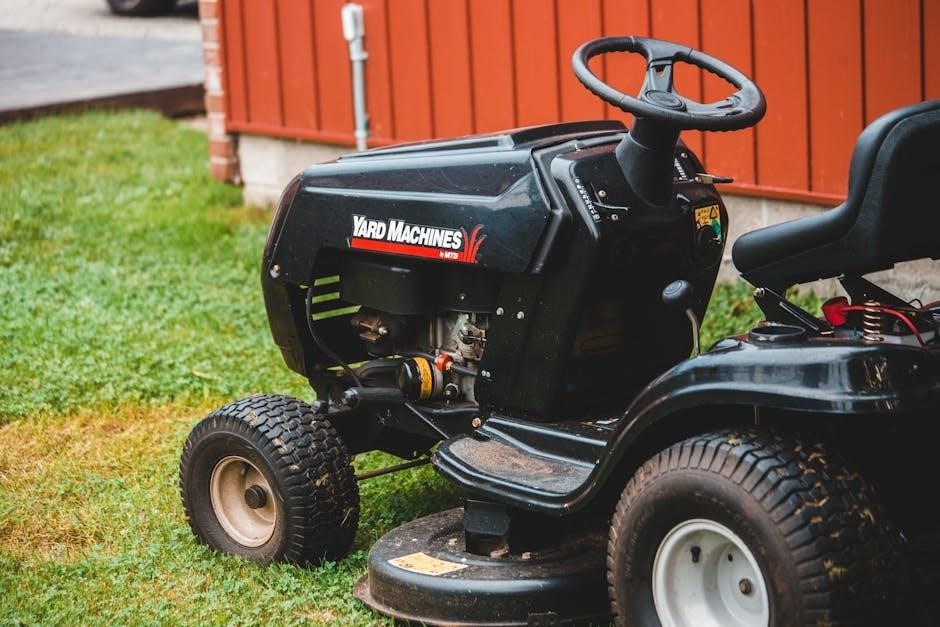
Familiarize yourself with the core components of your Craftsman riding mower. These include the engine, blade(s), deck, steering wheel, seat, and safety switch. Locate the fuel tank, oil dipstick, and air filter for routine maintenance.
Understand the function of controls like the throttle, brake, and blade engagement lever. Identify the discharge chute and any mulching or bagging attachments. Refer to the diagrams in your owner’s manual for precise locations and detailed illustrations of each component, ensuring proper understanding and safe operation.
Operation Instructions
Always consult your owner’s manual before operating; proper starting, steering, and mowing techniques are crucial for safety and achieving optimal cutting results.
Starting the Engine
Before attempting to start your Craftsman riding mower, ensure the blade is disengaged and the parking brake is firmly applied. Confirm the fuel tank contains fresh gasoline and the oil level is within the recommended range, as detailed in your owner’s manual. Typically, you’ll need to turn the ignition key to the ‘on’ position, then depress the clutch or brake pedal.
Next, engage the choke if the engine is cold, and slowly turn the key further to the ‘start’ position, holding it until the engine ignites. Once running, gradually disengage the choke. If the engine fails to start, consult the troubleshooting section of your manual for further assistance, avoiding repeated cranking to prevent battery drain.
Steering and Controls
Your Craftsman riding mower’s steering system typically utilizes a steering wheel connected to the front wheels, providing directional control. Familiarize yourself with the location and function of all controls, including the forward/reverse pedal or lever, the blade engagement switch, and the parking brake.
Practice steering in an open area to get a feel for the mower’s responsiveness. Avoid sharp turns at high speeds, as this can lead to instability. Always maintain a firm grip on the steering wheel and be aware of your surroundings. Refer to your owner’s manual for specific instructions related to your model’s steering and control features.
Mowing Techniques
Effective mowing with your Craftsman rider involves overlapping each pass by a few inches to prevent scalping and ensure a consistent cut. Adjust the cutting height to suit your lawn’s needs, generally avoiding removing more than one-third of the grass blade length at a time.
Vary your mowing pattern each time to promote healthy grass growth and prevent soil compaction. Avoid mowing wet grass, as it can clog the deck and result in an uneven cut. Always discharge clippings away from walkways and structures, and consider mulching for added lawn fertilization.
Maintenance Schedule
Regular upkeep, including blade sharpening, oil changes, and filter replacements, is crucial for maintaining optimal performance and extending the life of your Craftsman mower.
Regular Maintenance Tasks
Consistent maintenance is key to a long-lasting Craftsman riding mower. Regularly check the tire pressure for optimal handling and fuel efficiency. Inspect belts and pulleys for wear, replacing them as needed to prevent breakdowns. Clean the mower deck after each use to avoid rust and buildup.
Furthermore, ensure all bolts and fasteners are tightened, and lubricate moving parts. Don’t neglect the air filter; a clean filter ensures proper engine performance. Periodically inspect the spark plug and replace it according to the manufacturer’s recommendations. These simple tasks contribute significantly to reliable operation.
Blade Sharpening and Replacement
Sharp blades are crucial for a clean cut and healthy lawn. Regularly sharpen blades to maintain optimal performance, typically every 25 hours of use. Remove the blades carefully, ensuring the spark plug is disconnected for safety. Use a blade balancer to prevent vibration and uneven wear.
If blades are severely damaged or worn, replace them with Craftsman-approved replacements. Always install blades correctly, following the owner’s manual instructions. Tighten blade bolts to the specified torque to prevent loosening during operation. Proper blade maintenance ensures a quality cut and extends mower life.
Engine Oil Changes
Regular engine oil changes are essential for maintaining the longevity of your Craftsman riding mower. Consult your owner’s manual for the recommended oil type and change interval, typically every 50 hours or annually. Warm up the engine slightly before draining the old oil.
Dispose of used oil responsibly at a designated recycling center. Refill with the correct amount of new oil, checking the dipstick to ensure proper levels. Proper lubrication reduces friction, prevents wear, and ensures smooth engine operation, maximizing the life of your mower.

Troubleshooting Common Issues
Addressing problems like starting failures, deck issues, or drive system malfunctions requires careful diagnosis; your owner’s manual provides initial guidance for resolution.
Engine Won’t Start
If your Craftsman riding mower engine fails to start, systematically check several key components. First, ensure sufficient fuel in the tank and that the fuel shut-off valve is open. Next, verify the spark plug is clean and properly gapped, and that the spark plug wire is securely connected. A faulty safety switch – often linked to the seat or brake – can prevent ignition; confirm these are engaged correctly.
Additionally, inspect the air filter for obstructions and the carburetor for potential clogging. Low battery charge can also hinder starting, so consider a jump-start or battery recharge. Consult your owner’s manual for specific troubleshooting steps related to your mower model, including detailed diagrams and safety precautions.
Mower Deck Problems
Addressing mower deck issues requires careful inspection. Uneven cutting often stems from dull or damaged blades; sharpen or replace them as needed, ensuring proper balance. Check for obstructions beneath the deck, like accumulated grass clippings or debris, which can affect cutting quality and strain the engine. Inspect the deck itself for bends or damage that could cause vibration or uneven cuts.
Furthermore, verify the deck height adjustment mechanism functions smoothly and that the deck is level. Loose or worn belts driving the blades can also cause problems; replace them if necessary. Always disconnect the spark plug before working on the mower deck for safety.
Drive System Issues
Troubleshooting drive system problems begins with checking the drive belt for wear or breakage; a slipping or broken belt prevents the mower from self-propelling. Inspect the belt tensioner to ensure it’s applying adequate pressure. If the mower engages but doesn’t move, examine the drive shaft and transaxle for damage or leaks.
Additionally, verify the forward/reverse linkage is properly connected and adjusted. Low fluid levels in the transaxle can also cause issues; consult your owner’s manual for the correct fluid type and level. Always disconnect the spark plug before inspecting the drive system.

Battery Information & Compatibility
Craftsman’s 20V Max battery system shares compatibility with Black and Decker’s 20V Max tools, allowing for versatile use and cost savings on replacements.
Craftsman 20V Max Battery System
Craftsman’s 20V Max system represents a significant leap in cordless power tool convenience, offering a broad range of tools powered by a single battery platform. This system’s core strength lies in its interchangeability, notably with Black and Decker’s 20V Max line. Users can leverage existing batteries and chargers, reducing overall costs and simplifying tool ownership.
Furthermore, the system allows for DIY battery cell replacement, utilizing cells from sources like old laptop batteries (LGES318650), offering a sustainable and economical solution for extending battery life. This adaptability demonstrates Craftsman’s commitment to user empowerment and value.
Interchangeability with Black and Decker 20V Max
A key benefit of the Craftsman 20V Max system is its full compatibility with Black and Decker’s 20V Max battery platform. This allows users to seamlessly utilize batteries and chargers between both brands, expanding tool options without incurring additional battery expenses. This cross-compatibility provides significant cost savings and convenience for consumers invested in either ecosystem.
Numerous users have successfully confirmed this interchangeability, even undertaking DIY projects like replacing individual battery cells within the Craftsman cases, demonstrating the system’s practical flexibility and user-friendly design.
Battery Cell Replacement (DIY)
For those comfortable with soldering, replacing individual cells within a Craftsman 20V Max battery pack is a viable option to restore functionality and extend battery life. Users have successfully utilized LGES318650 cells, commonly found in laptop batteries, for this purpose. This DIY approach offers a cost-effective alternative to purchasing entirely new battery packs.
However, proceed with caution, as improper soldering or cell handling can be hazardous. Successful replacements report no overheating or performance issues, demonstrating the feasibility of this repair method when executed carefully and correctly.
Craftsman Brand History & Manufacturing
Sears initially owned Craftsman, but SBD acquired the brand and relaunched it as a midrange value option, similar to Porter-Cable, in 2019.
SBD Acquisition and Brand Relaunch
Following Sears’ financial difficulties, SBD (Standard Industries) acquired the Craftsman brand in 2017. This acquisition marked a significant turning point, prompting a strategic relaunch focused on repositioning Craftsman within the tool market. SBD aimed to establish Craftsman as a dependable, midrange value brand, mirroring the success of their existing Porter-Cable line.
This involved substantial engineering efforts and a rapid expansion of the tool offerings. Notably, SBD adopted a design approach that closely resembled the T-Stak system, acknowledging Dewalt’s Toughsystem as the premium option. The relaunch signified a commitment to revitalizing the Craftsman legacy while adapting to evolving consumer demands and market dynamics.
TTI Manufacturing Connection
TTI (Techtronic Industries) is a major player in the power tool manufacturing landscape, owning brands like Milwaukee, Ridgid, and Ryobi. A frequently discussed point is TTI’s significant role in producing a substantial portion of Craftsman power tools after the SBD acquisition. This connection isn’t widely publicized, but industry observation suggests a strong manufacturing partnership.
The prevalence of rebranded tools is common within the industry, with companies like Wilde supplying components under various brand names. TTI’s involvement with Craftsman highlights the complex network of manufacturing and branding, demonstrating how tools can share underlying designs and production processes across different labels.
Evolution of Craftsman Tool Lines
Craftsman’s tool lines have undergone a notable evolution, particularly following the acquisition by SBD (Stanley Black & Decker). The brand relaunch aimed to position Craftsman as a midrange value option, mirroring SBD’s Porter-Cable line. This shift involved extensive engineering and production efforts to create a broad range of tools.
Interestingly, this period saw a design approach that closely resembled T-Stak storage systems, contrasting with Dewalt’s premium Toughsystem. The evolution reflects a strategic repositioning, focusing on affordability and accessibility while maintaining a recognizable brand identity within the competitive tool market.
Decoding Date Codes
Date codes on Craftsman tools reveal manufacturing details; understanding the format—like 92211.0470—helps pinpoint the year and potentially the manufacturer.
Understanding Model Number Format
Craftsman model numbers aren’t simply random sequences; they contain encoded information about the tool’s creation and origin. Deciphering these codes allows owners to trace the manufacturing date and, crucially, identify the original builder. For instance, a number like 92211.0470, found on a table saw, reveals the year as 1992, with subsequent digits potentially indicating February 11th.
The initial digits often represent the year of manufacture, while the following numbers denote the day within that year. However, the system isn’t universally consistent across all Craftsman products. Recognizing these patterns is key to understanding your tool’s history and sourcing appropriate parts or documentation.
Interpreting Date Codes (Example: 92211.0470)
Craftsman date codes, like the example 92211.0470, offer a glimpse into a tool’s manufacturing timeline. The leading digits, ‘92’, typically signify the year – in this case, 1992. The subsequent ‘211’ likely represents the day of the year, translating to February 11th. It’s important to note this isn’t a rigid rule, and variations exist.
Understanding this format aids in determining the age of your tool, which can be crucial for warranty claims or locating compatible replacement parts. While seemingly complex, these codes provide valuable insight into a product’s history and origin.
Identifying Manufacturer (Emerson Example)
Craftsman tools weren’t always manufactured solely by Sears; Identifying the original manufacturer is often possible through the model number. For instance, a Craftsman table saw with the model number 113.298761 was produced by Emerson Electric. This information is valuable when sourcing parts or researching specific tool features.
Knowing the manufacturer can clarify quality control standards and potential design characteristics. While Sears branded the tools, the actual production and engineering were frequently outsourced to companies like Emerson, impacting the tool’s overall build and performance.

Warranty Information
Craftsman historically offered a lifetime warranty on many tools, though current policies vary; understanding claim processes and specific details is crucial for coverage.
Lifetime Warranty Details
Craftsman’s famed lifetime warranty, a cornerstone of its brand image for decades, historically covered defects in materials and workmanship for the useful life of the product. However, following the brand’s acquisition by SBD, warranty terms have evolved. While some tools retain lifetime warranties, others now feature limited warranties with specific durations.
It’s essential to review the warranty documentation accompanying your specific Craftsman riding mower or tool. The original purchase receipt often serves as proof of purchase, vital for initiating a claim. The warranty typically doesn’t cover damage resulting from misuse, abuse, or normal wear and tear. Understanding these nuances ensures a smooth warranty experience.
Warranty Claim Process
To initiate a Craftsman warranty claim, gather your proof of purchase (receipt) and the model/serial number of your riding mower. Contact Craftsman customer support via phone or their website to obtain a claim number and instructions. You may need to provide photos or videos documenting the defect.
Depending on the issue, Craftsman may authorize a repair at a local service center, offer a replacement part, or, in some cases, replace the entire product. Returning the defective item might be required, and Craftsman will typically cover shipping costs for warranted repairs or replacements. Keep all communication records.

Air Compressor Information (Specific Models)
Older Craftsman air compressors, like the 2hp 20-gallon model from 1967, require locating specific manuals often through online forums and vintage tool sites.
Sears Craftsman 2hp 20 gal 100 psi Twin Cylinder
Finding information on the Sears Craftsman 2hp 20-gallon 100 psi twin cylinder air compressor, particularly older models like those from 1967, can be challenging. Original owner’s manuals are often unavailable through standard Craftsman channels. Dedicated online communities and vintage tool enthusiasts frequently share scans or recollections of these manuals.
Owners seeking documentation often rely on forums and websites specializing in antique tools. These resources can provide valuable insights into operation, maintenance, and troubleshooting specific to this model. The compressor’s model number (106.173640) is crucial when searching for relevant information.
Locating Manuals for Older Models (1967 Example)
Securing manuals for vintage Craftsman tools, like a 1967 air compressor, demands resourceful searching. Official Craftsman support often lacks documentation for such aged products. Online forums dedicated to vintage tools and Sears Craftsman enthusiasts are invaluable resources. These communities frequently archive scanned manuals or offer guidance from experienced owners.
Websites specializing in historical manuals and tool documentation can also prove fruitful. Patience and persistence are key, as locating these resources requires dedicated effort. Model numbers (e.g., 106.173640) are essential for targeted searches.

Comparing Craftsman to Other Brands
Craftsman positions itself as a midrange value brand, competing with Kobalt and Husky, offering a balance of price, features, and lifetime warranties.
Craftsman vs. Kobalt vs. Husky
Craftsman, Kobalt, and Husky represent popular choices for homeowners and DIY enthusiasts seeking reliable tools without premium price tags. Craftsman, historically known for its lifetime warranty, now focuses on a midrange value proposition under SBD ownership, mirroring brands like Porter-Cable; Kobalt, exclusive to Lowe’s, often emphasizes innovative features and competitive pricing, appealing to tech-savvy users. Husky, found at Home Depot, prioritizes durability and a straightforward user experience, frequently favored for basic tasks.
All three brands offer extensive selections and convenient store access, making them attractive alternatives to higher-end options. Ultimately, the best choice depends on individual needs, budget, and preferred retail location.
Positioning as a Midrange Value Brand
Craftsman’s recent repositioning, following its acquisition by SBD, centers on establishing itself as a dependable midrange value brand. This strategy mirrors SBD’s success with Porter-Cable, offering a balance between affordability and functionality. The relaunch involves extensive engineering and product development, aiming to deliver quality tools at competitive prices.
This shift means Craftsman no longer solely competes on a lifetime warranty, but rather on providing practical solutions for everyday users, appealing to a broader market segment seeking reliable performance without excessive cost.